
What Are the Pelvic Floor Muscles? Anatomy, Function & When to Get Help
The pelvic floor muscles are a group of muscles that are situated at the bottom of the pelvis. They help with several functions of daily life such as supporting and holding the pelvic and abdominal organs, they control bowel and bladder function, participate in intimacy, and stabilize the hips, low back, and pelvis. When we experience unresolved low back or hip pain, pelvic organ prolapse, urinary incontinence/urgency, and/or constipation and fecal leakage, then we know these muscles are not working well. A PT evaluation can help you learn how to coordinate these muscles to resolve these symptoms and prevent them from returning.
What Are the Pelvic Floor Muscles?
The pelvic floor muscles are a group of muscles that are situated at the bottom of the pelvis. The muscles connect from pubic bone (bone in the front) to the tailbone and to each of the sit bones. While it is termed the pelvic floor, these muscles really act as a hammock and act to lift and support the abdominal and pelvic organs. The pelvic floor is also known as the pelvic diaphragm. The pelvic floor muscles consist of a group of different muscles that all contract and relax together. They perform the following functions:
Support pelvic and abdominal organs
Control bowel and bladder function
Participate in intimacy (both sensation and function)
Stabilize the low back, hips, and pelvis
Coordinate with breathing to manage pressure within the abdomen during activity
Where Are the Pelvic Floor Muscles Located?
The pelvic floor muscles are located at the bottom of the pelvis. They attach to the pubic bones (bones at the front of the pelvis), the tailbone/coccyx, and the sit bones on each side. These muscles surround the openings of the urethra, rectum, and vagina and penis to control the bladder and bowel. Because of their location, the pelvic floor plays a key role in support, control, and stability. They work with your diaphragm (top), abdominals (front), and back muscles to manage pressure and movement throughout your body to help prevent dysfunction.
Female Pelvic Floor Muscles
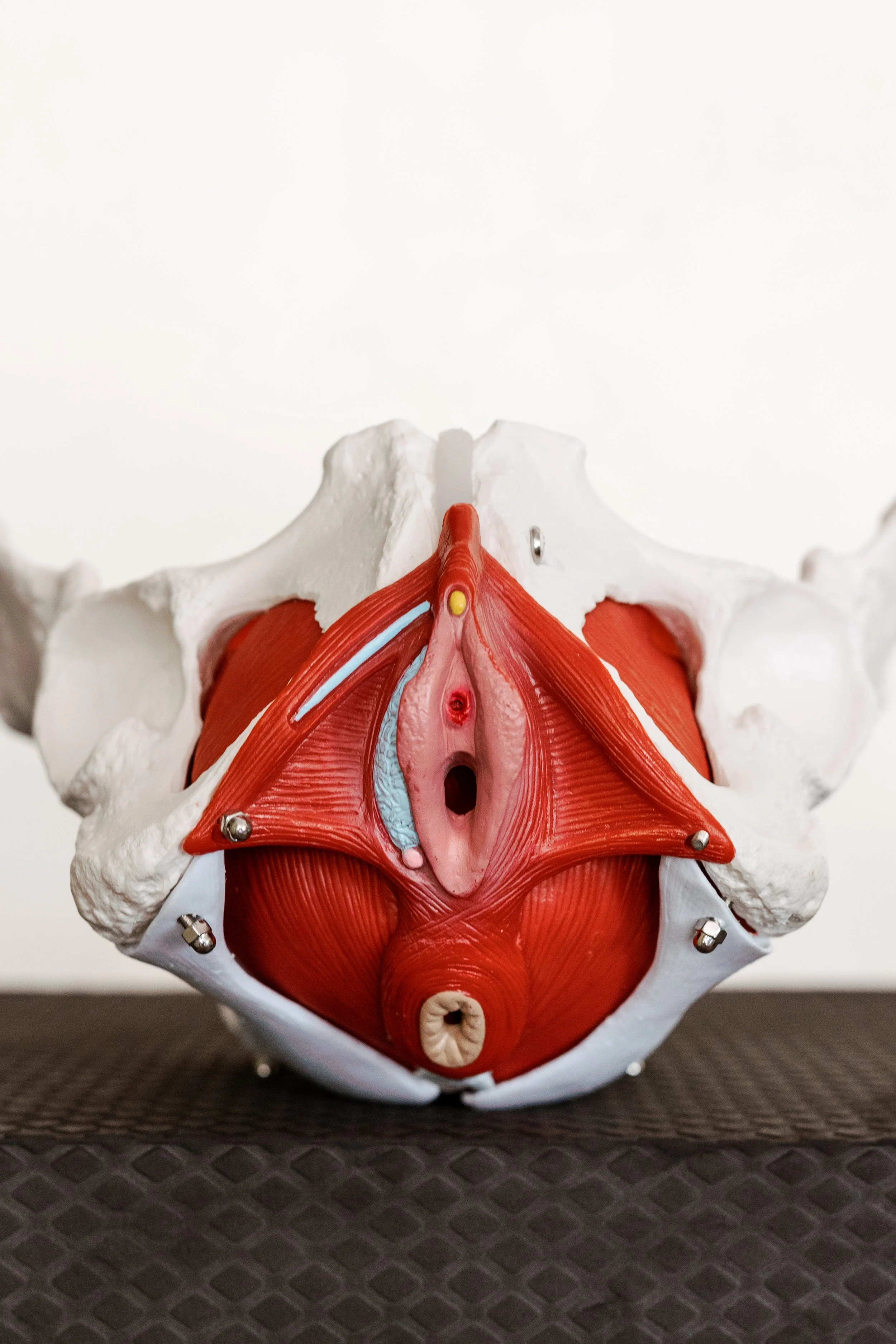
In the female pelvis, the urethra and bladder, vagina and uterus, and rectum sit directly on the pelvic floor muscles and are supported by the muscles of the pelvic floor. Because of pregnancy and childbirth, the female pelvis is anatomically wider than the male pelvis and the female pelvic floor is subject to increased stress and pressure due to a growing fetus in those that are pregnant. The pelvic floor must also expand and relax during the birth of the baby which makes the pelvic floor an integral part of the birth process.
Male Pelvic Floor Muscles

Males have a pelvic floor too! In fact, the male and female pelvic floor muscles, while oriented differently, are analogous or the same. The main and obvious difference is that the male urinary and reproductive organs are outside of the body. The urethra runs through the pelvic floor and through the penis, the prostate sits under the bladder and directly on top of the pelvic floor and the rectum sits directly behind the bladder and prostate. Common male concerns include testicular pain, pelvic pain, urinary leakage or hesitancy, constipation, and/or prostatitis or prostatectomy due to cancer contributing to bowel, bladder, and sexual issues.
The Muscles of the Pelvic Floor: What's Actually in There?
There are several individual muscles that make up the pelvic floor and that work together in an “all or none” fashion, meaning they all contract/ squeeze together and they all relax together. You can voluntarily control the pelvic floor muscles as a group can help coordinate them to eliminate your symptoms. The pelvic floor muscles consist of the superficial muscles, the main muscle group, and the walls the of the pelvis. These muscles all work together to support and stabilize the hips and pelvis.
Superficial muscles: These muscles surround the opening of the urethra (in both male and female), the vagina (female), and the anus (male and female) to control continence.
Bulbospongiosum
Superficial transverse perineal muscle
Deep transverse perineal muscle
Main muscle group makes up the bulk of the pelvic floor. They act to lift and support the pelvic organs sitting on top.
Levator ani group
Puborectalis
Pubococcygeus
Iliococcygeus
Coccygeus: attaches to the coccyx
The pelvic wall (or sides of the pelvic floor) attach from the pelvis onto the hip and act as hip stabilizers.
Obturator internus: attaches from the pelvis onto the hip
Piriformis muscle: attaches from the sacrum onto the hip include the obturator internus and piriformis.
What Do the Pelvic Floor Muscles Do?
Organ Support
The pelvic floor muscles form a hammock at the bottom of the pelvis and hold up the pelvic and abdominal organs. The pelvic floor supports the urethra, vagina, penis, and anus by wrapping around these openings and acting as sphincters to support these immediate structures. The bladder, uterus, prostate, and rectum sit immediately on top of the pelvis floor while the abdominal organs are above the pelvic organs.
Bladder and Bowel Control
The pelvic floor muscles assist in control of urination, bowel movements, and sexual function. The pelvic floor muscles are active and contracting throughout the day and this is what normally prevents urine and stool from leaking. When you sit down (or stand) on the toilet to urinate or to have a bowel movement, then the pelvic floor muscles completely relax to allow for urine and stool to pass through and exit the body.
Core Stability, Posture and Back Pain
The pelvic floor muscles stabilize the pelvis, hip, and core. The deep core muscles consist of 4 primary muscles. The “front” of the core consists of the transverse abdominis muscle. The “back” of the core is the multifidus muscle. The “top” of the core is the diaphragm which is the muscle under the lungs. And last, but surely not least, the “bottom” of the core are the pelvic floor muscles. When the four muscles contract and work together, they work the best. If one of those muscles is not functioning as well, then the whole core is compromised and pain, leaking, constipation, urinary or stool urgency and frequency can occur.
Breathing and Pressure Management
The pelvic floor resists increased pressure from the abdomen with coughing, laughing, sneezing, lifting, and exercise. They also coordinate with breathing. A build up or increase in pressure if not managed with breathing, can push down and harm the pelvic floor. It is important that these muscles coordinate with breathing during activity to decrease abdominal pressure and improve the pelvic floor’s ability to resist downward pressure through a contraction.
Sexual Function
Pelvic floor muscles help maintain blood flow for erections in all people and must relax for comfortable penetration. When these muscles are overactive/ tight or have trigger points, symptoms like pain, difficulty with erection, or challenges with orgasm can occur. If pelvic pain persists beyond one month or isn’t addressed by other providers, a pelvic floor physical therapist can help address symptoms and connect you with trusted providers.
What Can Affect or Weaken the Pelvic Floor?
Many factors can influence the health and function of the pelvic floor, including pregnancy, childbirth (vaginal or cesarean), surgery, inactivity, body weight changes, hormonal shifts, and aging. Persistent stress can also play a significant role by increasing muscle tension and affecting the nervous system.
Pelvic floor weakness can present in two primary ways. First, the muscles may become lengthened or stretched, which is common during pregnancy, postpartum, with sedentary lifestyles, or as we age. In these cases, strengthening the pelvic floor and surrounding muscles is often beneficial. Second, the pelvic floor may be overactive or tight, limiting its ability to contract effectively. This is common in individuals with high stress levels, cyclists, or athletes who do not incorporate proper breathing, mobility, and recovery into their routines. It may also occur after surgery due to protective muscle guarding and imbalance.
As we age, we experience a decrease in muscle mass and changes in hormones such as decreased estrogen during menopause. This change in estrogen can impact tissue quality and coordination. In males, prostate enlargement may also affect urinary and pelvic floor function.
The good news: with the right, individualized approach, the pelvic floor can be retrained, strengthened, and supported at any stage of life.
Signs That Your Pelvic Floor May Need Attention
Signs that your pelvic floor is overactive or tight:
Pain with gynecological exams and/or penetration
Burning and frequent urination in the absence of a urinary tract infection
Constipation and straining with bowel movements
Difficulty initiating urine flow or feeling like you cannot empty completely
Pain, pressure, or tightness with activity
An overactive pelvic floor can be a weak pelvic floor because this means the muscles are having a difficult time relaxing. Muscles need to relax in order to be strengthened. A pelvic floor physical therapist can help you restore proper coordination and reduce symptoms.
Signs that your pelvic floor is weak:
Feeling of heaviness or pressure in the pelvis, particularly the vagina
Urine leakage with coughing, laughing, and sneezing
Reduced sensation or difficulty with orgasm
Frequent and urgent urination
A weak pelvic floor often means the muscles lack strength, endurance, and/or coordination. The good news is that with the right guidance, these muscles can be retrained and strengthened to improve support, control, and overall function.
What is Pelvic Floor Dysfunction?
Pelvic floor dysfunction occurs when the pelvic floor muscles are weak or not coordinating well, resulting in symptoms such as urinary leakage, urgency and frequency, constipation, stool leakage, pelvic pain, and abdominal or low back pain. The pelvic floor muscles are also what we call a “victim tissue,” meaning they are compensating or trying to stabilize the pelvis and surrounding structures. Because of this, the pelvic floor should be thoroughly evaluated to determine the source of the dysfunction and identify any underlying factors contributing to symptoms.
Pelvic Floor Exercises: What Actually Helps
There’s no shortage of advice online promising that a few simple pelvic floor exercises will fix your symptoms—but it’s rarely that simple. There is no single exercise that works for everyone, because pelvic floor dysfunction doesn’t look the same in every body.
Most people don’t think about their pelvic floor until something feels off—like urinary leakage, urgency, constipation, pelvic pain, or changes during pregnancy, menopause, or after prostate surgery. By the time patients come to us, they’ve often already tried exercises that “didn’t work.” In many cases, it’s not about the effort, it’s that the exercises weren’t right for their body, other muscles were compensating, or they were doing them incorrectly, at no fault of their own!
The pelvic floor doesn’t work in isolation. It’s part of a system that includes your deep core, hips, low back, and breathing mechanics. That’s why a comprehensive evaluation matters. At Summus, we assess not only your pelvic floor, but how your pelvic floor works with the entire system to determine how to treat your body. Once we identify the underlying cause, we build an individualized plan that will help you do it correctly, with the right reps and sets, and how to progress and incorporate it into your daily life. This way we can partner with you as a team to eliminate your symptoms and keep them from coming back.
When to See a Pelvic Floor Physical Therapist
At Summus, we specialize in helping you address symptoms such as urinary leakage, urgency or frequency, stool leakage, constipation, pelvic pain, and changes related to pregnancy, postpartum, perimenopause, menopause, or prostatectomy. If your symptoms have lasted more than a few weeks, continue to return, or you’ve been told everything is “normal” but don’t feel like yourself, it’s worth an evaluation.
A pelvic floor assessment includes an external exam, an internal exam (with your full consent), and a comprehensive evaluation of your low back, hips, and pelvis to understand how your body is working as a whole. If you’ve tried traditional physical therapy or chiropractic care without relief for low back, hip, or sacroiliac pain, we find that the pelvic floor may be a missing piece. And thus, taking a different perspective to the same issue you have been experiencing can be successful in eliminating your symptoms.
We take a whole-body, individualized approach to identify whether your pelvic floor is weak, overactive, or both—and create a plan to help you feel and move better.
Frequently Asked Questions About the Pelvic Floor
At What Age Does the Pelvic Floor Start to Weaken?
There isn’t a single age when the pelvic floor suddenly weakens—it’s a gradual, lifelong process influenced by the activities you participate in and how you care for your body. For many people, subtle changes can begin as early as their 30s or 40s, when muscle mass and bone density naturally start to decline. Hormonal shifts (like perimenopause and menopause), pregnancy and childbirth, prostate changes in men, and periods of inactivity can also cause the pelvic floor to change and weaken over time. With the right exercises and habits, you can have a strong and healthy pelvic floor at any age!
What are the muscles in the pelvis?
There are 14 muscles that make up the pelvic floor (7 on each side that mirror each other). The superficial muscles consist of the superficial and deep transverse perineal muscle and bulbospongiousum (male)/bulbocavernosus (female). The main muscle group of the pelvic floor is the levator ani and coccygeus muscles. The levator ani muscle group consists of 3 muscles: pubococcygeus, iliococcygeus, and puborectalis. The coccygeus muscle is the deepest muscle and connects to the tailbone.
Answer the levator ani + coccygeus question in plain language.
Do men have a pelvic floor?
Yes! Men and ALL people have a pelvic floor. The pelvic floor has the same components between male and females, the muscles are just oriented differently. The muscles in men sit at the base of the pelvis and support the bladder, bowel, and prostate. They also play an important role in urinary control, bowel function, and sexual health, including erections and ejaculation.
Where do pelvic floor muscles hurt?
If the pelvic floor muscles are causing pain, common locations include the perineum (space between the vagina and anus or base of the penis and anus), the penis, testicles, vulva, or vagina, tailbone, rectum, and lower abdomen or deep pelvis. The pelvic floor muscles can refer pain to other areas of the body and thus some symptoms don’t always match the exact source. At Summus, we look at the whole system to find the true driver of pain and help you feel better, faster.
Can cycling weaken the pelvic floor?
Cycling often causes an overactivity and tight pelvic floor leading to weakness. However, there are exercises and stretches you can do on and off the bike to help balance the pelvic floor so that cycling does not weaken the pelvic floor.
Do they finger you during pelvic floor therapy?
In pelvic floor physical therapy, an internal exam may be offered, in a clinical and professional setting. The evaluation involves placing a gloved, lubricated finger inserted into the vagina or rectum to assess the pelvic floor muscles. The PT is evaluating strength, coordination, tension, and areas of pain. The internal exams are always optional and performed with full, informed consent, the therapist will explain everything beforehand and during the evaluation, and you can decline, stop, or modify the exam at any time. There is never pressure to have an internal exam completed.